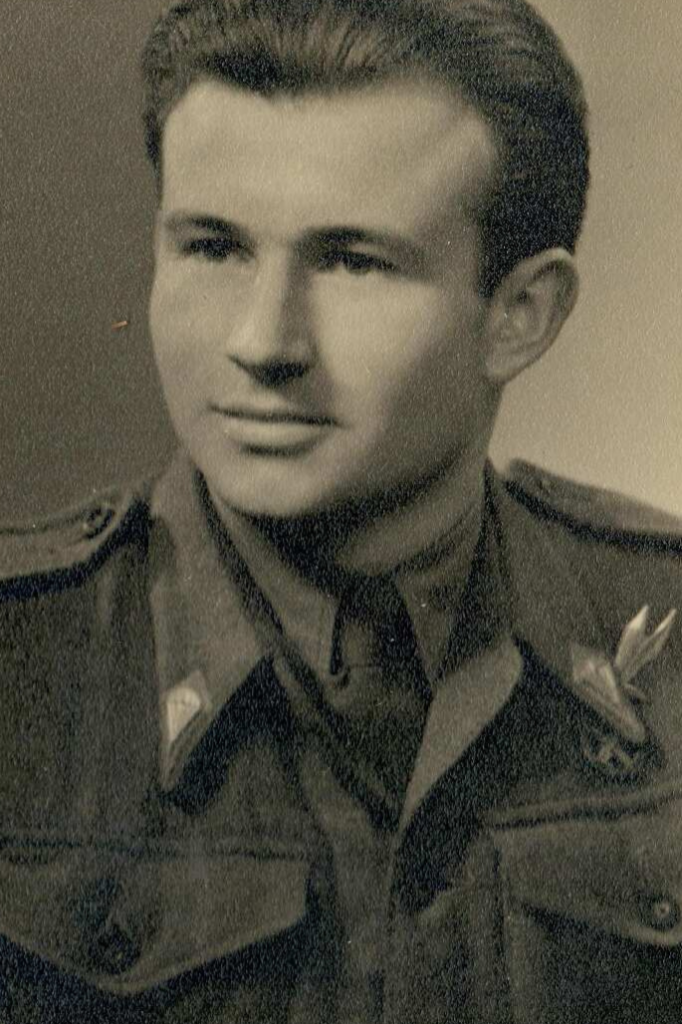
In February 1940, Soviet troops came to the home of Czeslaw Cholewa (Chester) and gave his family only 30 minutes to pack their most important belongings before they were deported to Siberia. There, Cholewa was forced to work cutting down trees. His family was able to leave Siberia, however, after the German invasion of Russia in June 1941. Cholewa and his father joined the Free Polish Army, while his mother and siblings were resettled in Africa. The family was not reunited until eight years later after the war. Chester eventually made his way to Britain where his request to join the Air Force was denied because he had never finished high school. Instead, he became a paratrooper who served with the Polish Armed Forces in the West. The above photograph was taken of Chester while serving with the Polish paratrooper brigade in England in 1944.
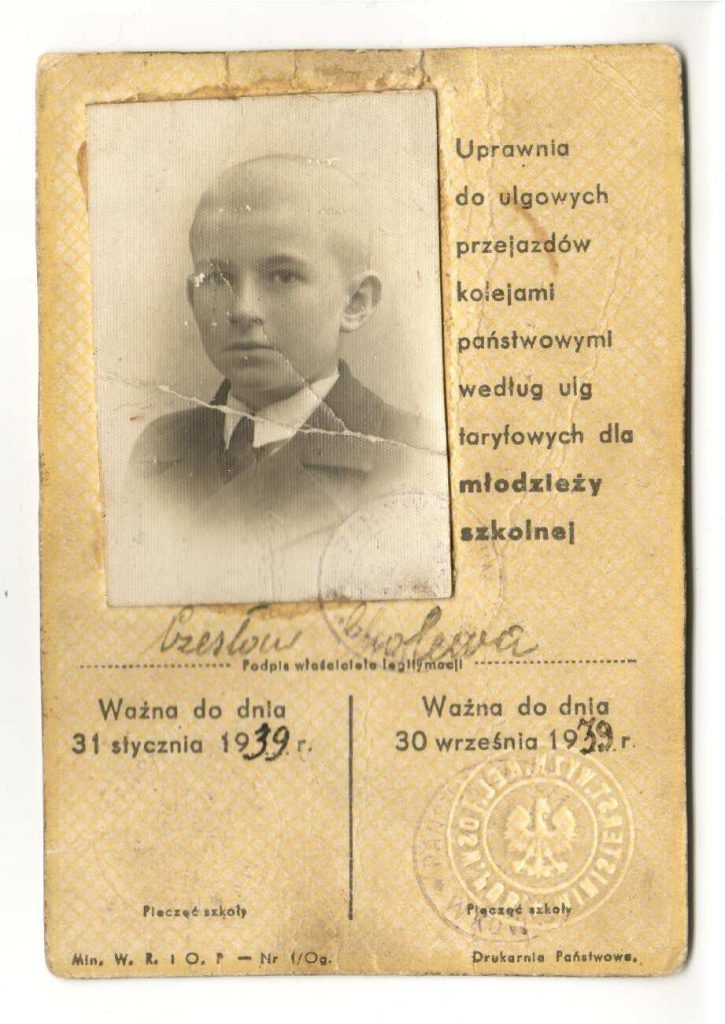
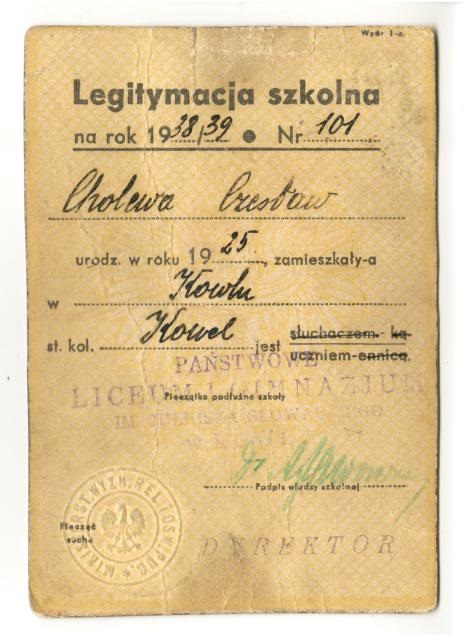
This is Chester’s school identity card from the 1938-39 school year. It shows that he was born in 1929.
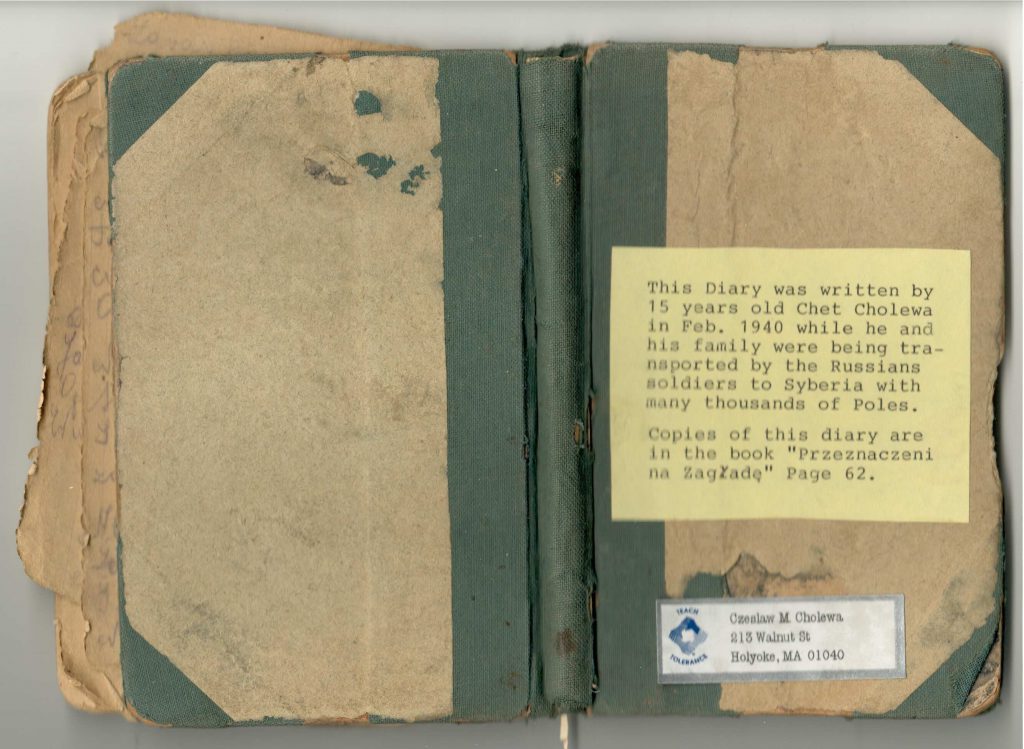
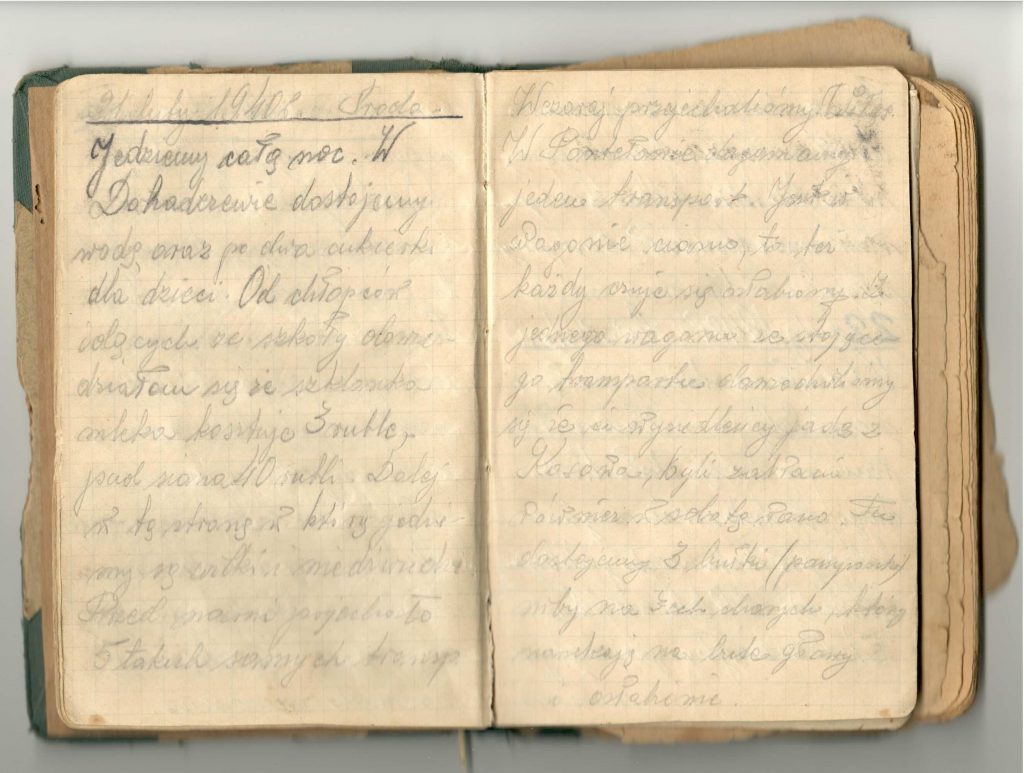
In his journal, Czeslaw Cholewa wrote about the night that the Russians came to his family’s door and his experience during the days in the boxcar traveling to the Siberian forced labor camps. Some of his journal entries were added to the book The Mass Deportation of Poles to Siberia, An Historical Narrative Based on the Written Testimony of the Polish Siberian Survivors, (polish center guide). In another journal he write about his life while in Siberia.
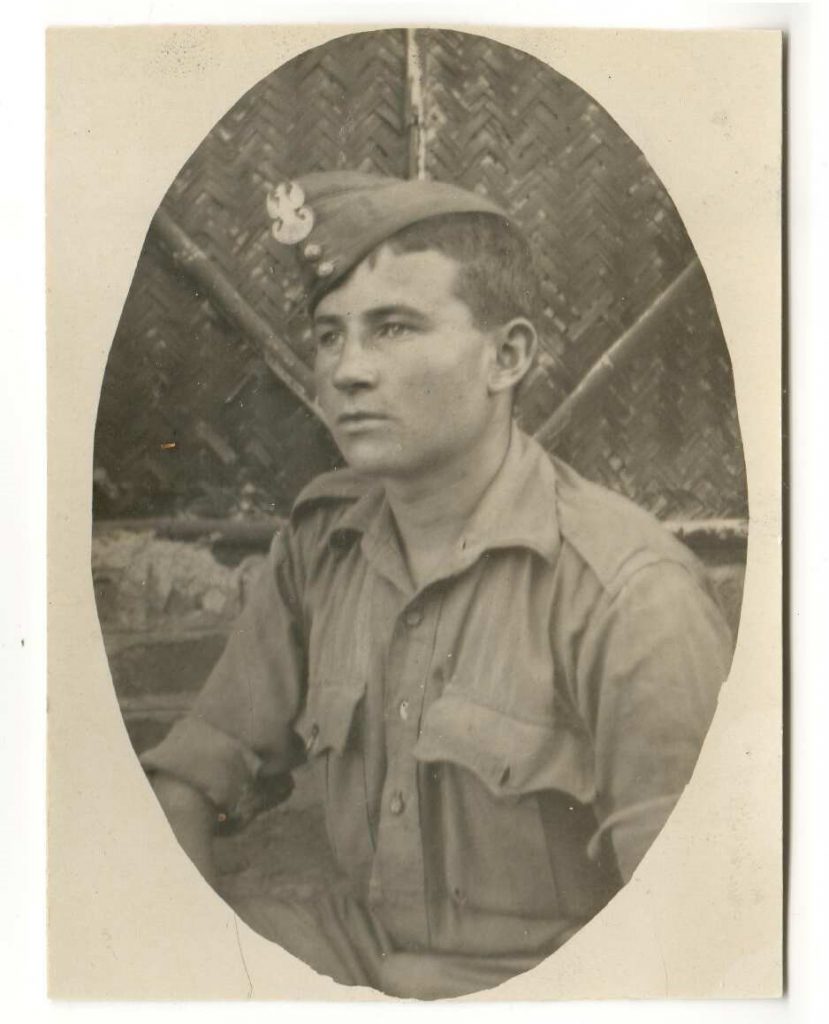
This photograph of Chester was taken in India on February 22, 1943, after he had left the Soviet Union and joined a Polish army unit.
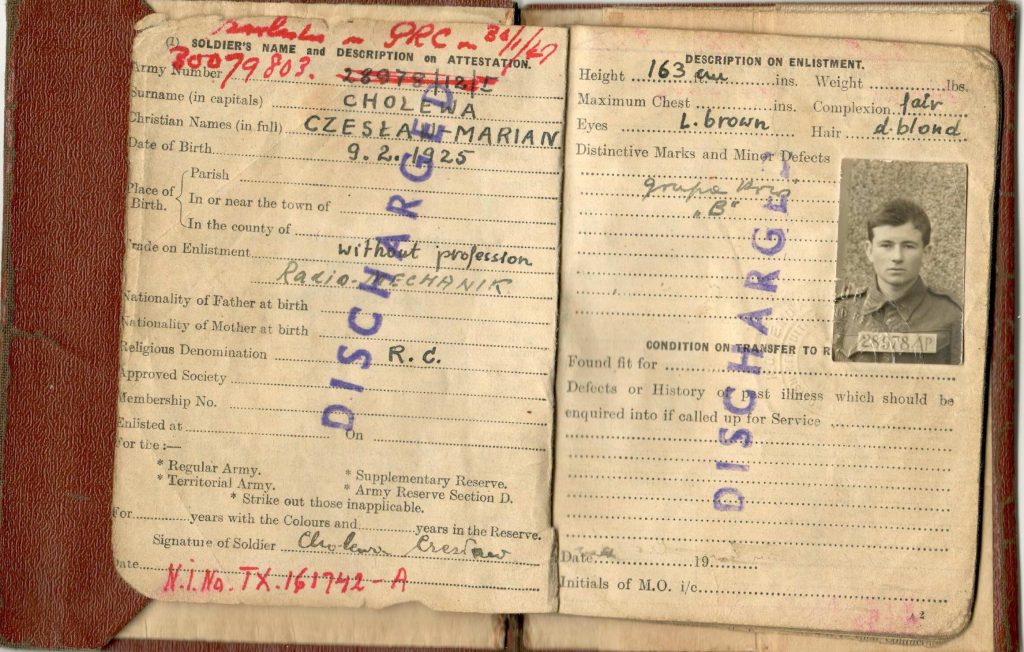
This image is taken from Chester’s Soldier Service and Pay Book, which he was obliged to always carry with him while technically serving with the British Army. In 1946, the British government formed the Polish Resettlement Corps as a holding unit for members of the Polish Armed Forces who had served with the British and did not want to return to communist Poland. Chester’s service book shows that he was discharged from the PRC on January 30, 1947, and that he was a trained radio mechanic.
After the war ended in 1948, Cholewa was able to reconnect with his family in England, where he met and married his wife Maria who was also Polish. Together they followed Cholewa’s cousin to America and settled in Holyoke, Massachusetts. Chester Cholewa was a resident of Holyoke until he died at 90 years of age in 2015.
While in Holyoke, Cholewa was very involved in the local communities. He worked at an electrical company in Chicopee, Massachusetts, as well as at a machine shop in Westfield, Massachusetts. He was part founder of the General Tadeusz Kosciuszko monument for Polish Veterans. He was also a founder of the Association Pole Unitas Holyoke, which is an organization that is for men and women of Polish descent to socialize.
Author: Sabrina McBride, History major, Elms College.